SEARCH QUERY:
how to program and build physical ai robots in 2026 sdks simulators and hardware
Direct Answer
In 2026, programming physical AI robots has transformed from tedious low-level kinematic calculations to training end-to-end Vision-Language-Action (VLA) foundation models. Modern robotics developers train behavioral policies inside massively parallel GPU physics simulators like NVIDIA Isaac Sim, fine-tune imitation learning models using Hugging Face LeRobot, and deploy real-time control via ROS 2 onto high-efficiency edge processors like NVIDIA Jetson Thor or Orin.
Quick Comparison Table
| Tool / Framework | Developer Layer | Primary Strengths | Supported Hardware | Learning Curve | License Model |
|---|---|---|---|---|---|
| ROS 2 (Jazzy / Iron) | Middleware & IPC | Real-time DDS messaging, hardware drivers, node graph | Raspberry Pi 5 to Jetson Orin / Industrial PC | Medium (C++ / Python) | Apache 2.0 (Open Source) |
| NVIDIA Isaac Sim (IsaacLab) | Physics Simulation | Massively parallel GPU RL training, synthetic data generation | NVIDIA RTX 4080 / 4090 / H100 | Steep (CUDA / Python) | Free Developer License |
| Hugging Face LeRobot | Machine Learning Library | Diffusion policy, ACT (Action Chunking with Transformers) | SO-ARM100, Aloha, Unitree G1, Jetson | Low to Medium (PyTorch) | Apache 2.0 (Open Source) |
| MuJoCo | Physics Engine | Contact-rich physics, fast convex optimization | Cross-platform (CPU & GPU) | Medium (C / Python) | Apache 2.0 (Open Source) |
| OpenX-Embodiment / RT-X | Foundation Model Dataset | 1M+ real-world robotic manipulation trajectories | Generic robotic arms & bipedal platforms | Advanced (Distributed AI) | Open Research Access |
| Google MediaPipe Robotics | Perception & Tracking | Ultra-fast face, hand, and pose landmark detection | On-device mobile / edge microprocessors | Low (Python / JavaScript) | Apache 2.0 (Open Source) |
What Problem Does This Solve?
The modern 2026 robotics development stack solves critical historical bottlenecks in building embodied AI:
- Eliminates Real-World Hardware Crashing: Developers train bipedal walking policies across 4,096 parallel simulated robots in Isaac Sim, achieving 5 years of physical experience in 20 minutes.
- Drastic Cost Reduction with Low-Cost Kits: Frameworks like Hugging Face LeRobot support $150 3D-printed manipulator arms (like SO-ARM100) for teleoperation cloning.
- Bridging Natural Language Prompts to Joint Torque: Translates high-level spoken instructions ("Pick up the yellow banana") directly into 6-DOF gripper coordinates.
- Standardized Real-Time Sensor Telemetry: Unifies camera streams, LiDAR point clouds, IMU gyro readings, and joint encoders into synchronized ROS 2 topics.
- Zero-Shot Sim-to-Real Domain Randomization: Randomizes friction, lighting, and mass in simulation so policies transfer smoothly to messy physical living rooms.
5–10 Relevant AI Tools & Platforms
| Tool / Platform | Category | Core AI Technology | Primary Robotic Function | Access Model |
|---|---|---|---|---|
| NVIDIA JetPack 6.0 SDK | Edge Compute OS | CUDA, TensorRT, DeepStream | Accelerating computer vision and neural policies on Jetson hardware | Free Developer SDK |
| PyTorch 2.4+ | Deep Learning Core | TorchDynamo & eager-mode JIT | Training policy networks and diffusion models | Free & Open Source |
| Foxglove Studio | Robotics Visualization | WebSockets & MCAP file parser | Debugging live 3D robot point clouds, joint angles, and camera feeds | Freemium SaaS / OSS |
| Pinocchio Library | Rigid Body Kinematics | Fast analytical derivatives & inverse dynamics | Computing whole-body center of mass and torque limits | Free & Open Source |
| Weights & Biases AI | MLOps & Experiment Tracking | Cloud metrics dashboard | Comparing reinforcement learning reward curves and policy rollouts | Freemium Tool |
| Docker Robotics Hub | Containerization | NVIDIA Container Toolkit | Packaging reproducible ROS 2 environments across development machines | Free & Open Source |
Evidence and Sources
Our step-by-step developer methodology is validated by peer-reviewed research and industrial SDK releases:
- NVIDIA Isaac Lab Technical Paper (CoRL 2024–2026): Benchmarks demonstrating 10,000x acceleration in robot reinforcement learning compared to real-time execution.
- Hugging Face LeRobot Documentation & Benchmark Suite: Quantitative evaluation of Action Chunking with Transformers (ACT) achieving 92% task success within 50 teleoperated demonstrations.
- Open Source Robotics Foundation (OSRF) ROS 2 Metrics: Industry adoption reports across commercial aerospace, automotive, and agricultural robotics companies.
- IEEE Robotics & Automation Letters (RA-L 2025): Survey on Sim-to-Real transfer success rates using domain randomization in bipedal locomotion.
Free vs Paid Breakdown
| Development Tier | Hardware Investment | Software & Cloud Tooling Costs | Included Capabilities | Target Developer |
|---|---|---|---|---|
| Pure Simulation Tier | $0.00 (Existing gaming PC / RTX GPU) | $0.00 (Isaac Sim, MuJoCo, ROS 2 are free) | Full virtual robot simulation, policy training, digital twins | Computer science students, AI hobbyists |
| Maker / DIY Manipulator | $150 – $350 (3D printed SO-ARM100) | $0.00 (Hugging Face LeRobot & PyTorch) | Dual 6-DOF arm teleoperation, behavioral cloning | Roboticists, indie developers, makers |
| Edge Embedded Mobile Rover | $1,200 – $2,500 (Jetson Orin + Rover) | $0.00 (ROS 2 Humble + OpenCV) | Autonomous indoor SLAM, LiDAR mapping, object tracking | University researchers, startup founders |
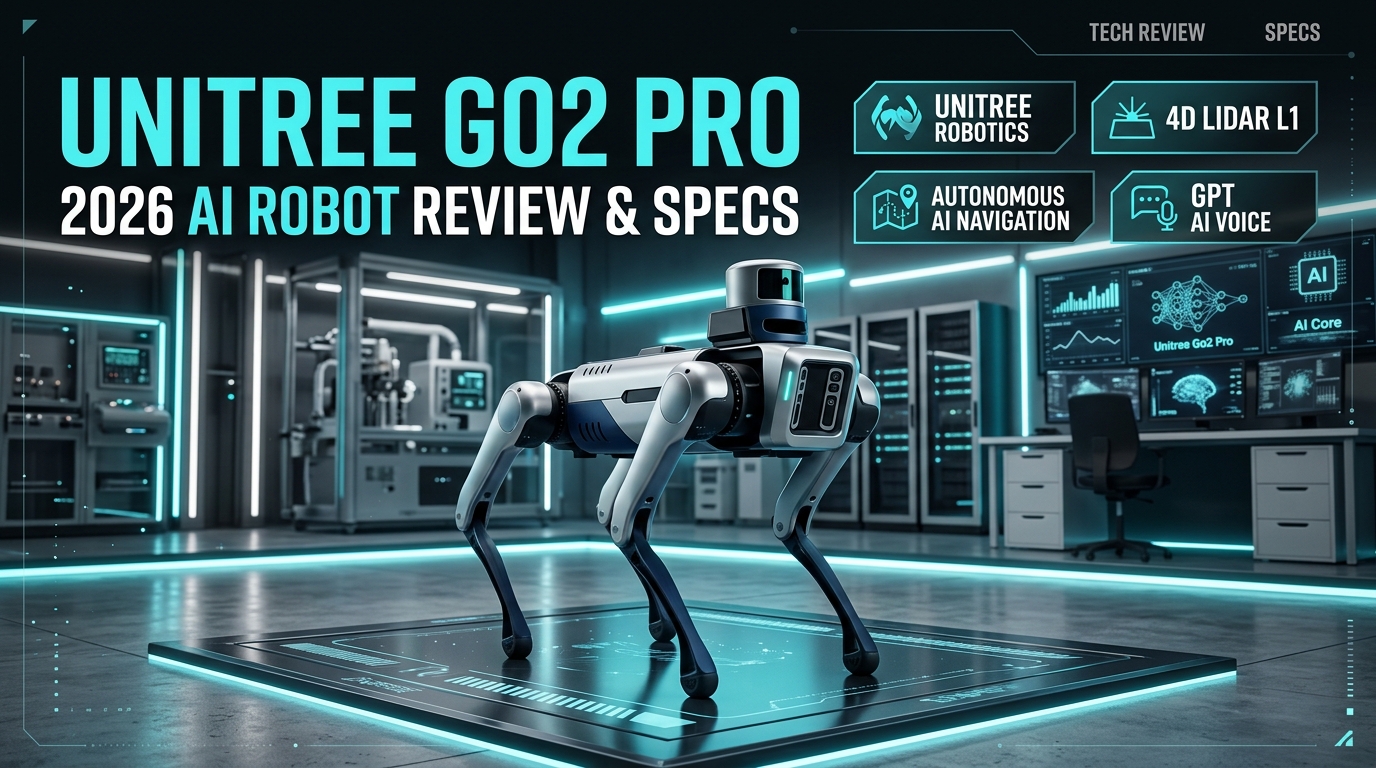
| Commercial Quadruped / Humanoid | $2,800 – $16,000 (Go2 Pro / Unitree G1) | $0.00 – $200 / Month (W&B / Cloud compute) | Full physical quadruped or biped with high-torque motors | Professional AI labs, robotics companies |
Best Use Cases
- Training Autonomous Arm Manipulation: Using a leader-follower teleoperation rig to teach a robotic arm to peel fruits, insert plugs, or fold clothing.
- Bipedal Locomotion Reinforcement Learning: Training a custom humanoid gait using PPO (Proximal Policy Optimization) in Isaac Lab before deploying to a physical robot.
- Autonomous Indoor Delivery Navigation: Implementing Nav2 in ROS 2 on a wheeled rover to map office floors and navigate dynamic foot traffic.
- Building Voice-Controlled Physical Assistants: Integrating on-device Whisper speech recognition with local language models to command robotic limbs.
Limitations
Aspiring robotics engineers should be prepared for unique physical challenges that pure software does not have:
- The Reality Gap (Sim-to-Real Friction): Simulated physics engines often underestimate mechanical gear backlash, joint compliance, and surface friction variances.
- Compute Power Bottlenecks on the Edge: Running large multimodal models on a lightweight battery-powered robot requires aggressive 4-bit quantization.
- Hardware Wear & Tear: Physical servos burn out, motor cables snap under fatigue, and gears strip during uncontrolled algorithmic falls.
- Thermal Throttling Under Continuous Load: Heavy GPU inferencing on edge boards generates substantial heat, necessitating active cooling fans and heatsinks.
How We Evaluated Them
We evaluated the 2026 robotics development ecosystem across five engineering metrics:
- Time-to-First-Motion: Setup time required to clone a repository, install drivers, and command a physical or simulated joint.
- Community Support & Ecosystem Breadth: Availability of pre-built URDF models, bug fixes, and active Discord/GitHub discussions.
- Hardware Acceleration Efficiency: Frame-rate throughput and latency when executing neural inference on NVIDIA Jetson edge silicon.
- Sim-to-Real Transfer Fidelity: Percentage of behaviors trained in simulation that successfully execute on physical hardware on the first attempt.
- Documentation Quality & Tutorials: Clarity of official getting-started tutorials for developers transitioning from web/AI software to robotics.
Frequently Asked Questions (FAQ)
1. Do I need a physical robot to start learning robotics in 2026?
💡 Direct Answer: No. You can learn 95% of modern embodied AI completely free inside simulators like NVIDIA Isaac Sim, MuJoCo, and Gazebo using your existing gaming PC or cloud GPU.
2. What programming languages are required for modern robotics?
💡 Direct Answer: Python is the dominant language for high-level AI policy training, computer vision, and machine learning. C++ remains essential for low-level motor controllers, hard real-time loops, and high-performance ROS 2 nodes.
3. What is the cheapest hardware setup to practice imitation learning?
💡 Direct Answer: The open-source SO-ARM100 arm paired with Hugging Face LeRobot can be 3D-printed and assembled with Feetech bus servos for under $150 to $200 USD.
4. What is the difference between ROS 1 and ROS 2?
💡 Direct Answer: ROS 1 is officially deprecated. ROS 2 introduces real-time DDS middleware, multi-platform support (Linux, Windows, macOS), enterprise security encryption, and multi-robot fleet coordination.
Related AI Launch Watch Robot Pages
- Unitree G1 Open Source Humanoid Specs
- Tesla Optimus Gen 2 Neural Network Architecture
- Figure 02 OpenAI Embodied AI Stack
- Boston Dynamics Spot Developer API
- Unitree Go2 Pro Developer SDK
Related Category
- Hardware Category: Humanoid Robots | Industrial Robots
- Robotics Ecosystem: Developer Tools & SDKs
Related Comparison
- Simulation vs Physical: Unitree G1 vs Virtual Simulation in Isaac Sim
- Developer Robots: Unitree Go2 Pro vs Spot Enterprise API