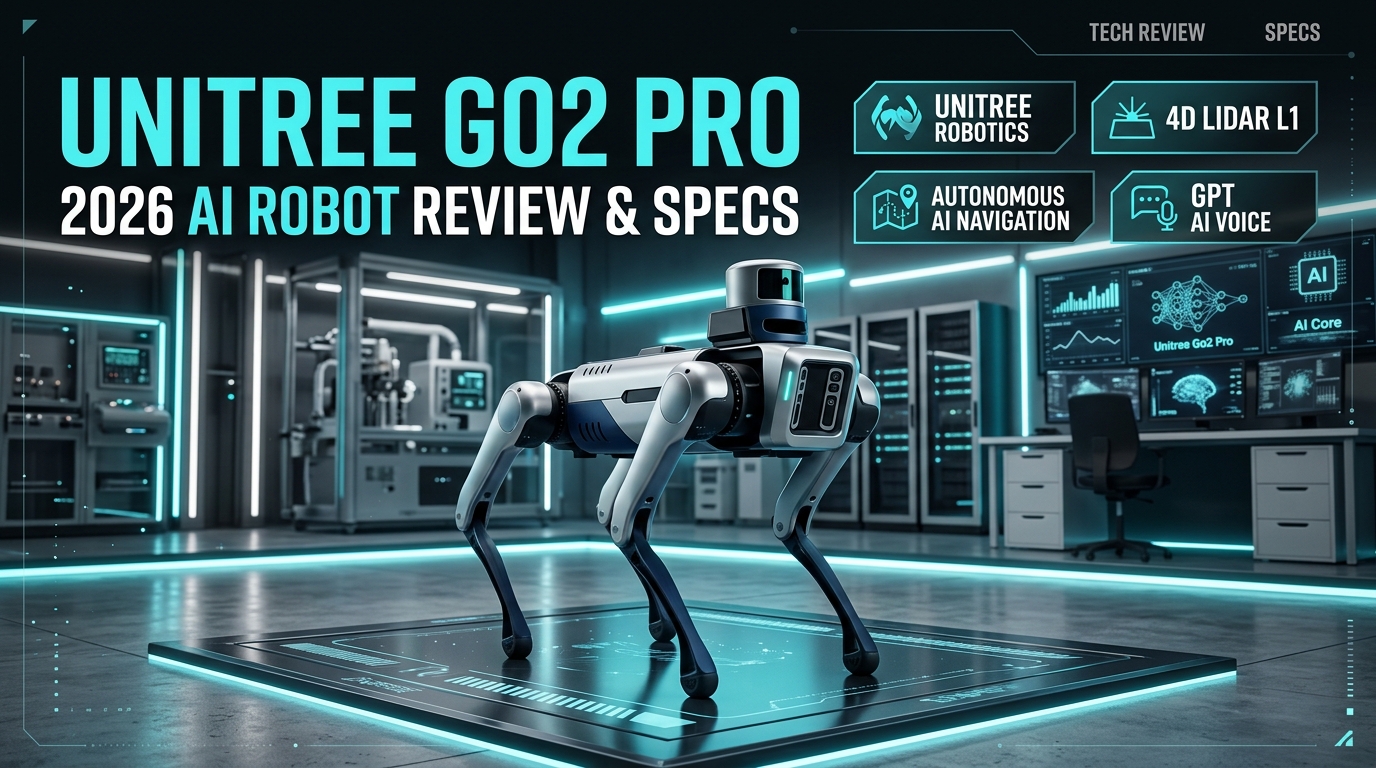
For decades, robotics and artificial intelligence existed in separate domains. Robotics was about classical physics: inverse kinematics, trajectory planning, PID controllers, and rigid deterministic automation. AI lived inside server racks: generating text, predicting tokens, and classifying photos.
In late 2026, those two streams have converged into a singular groundbreaking frontier: Embodied Intelligence. Powered by Vision-Language-Action (VLA) foundation models, bipedal humanoid robots are stepping out of laboratory cages onto factory assembly lines and into domestic homes.

The Vision-Language-Action (VLA) Paradigm
Traditional robots required thousands of lines of explicit C++ code to grasp a specific wrench at an exact coordinate. If the wrench was tilted by three degrees or placed two centimeters to the left, the robot failed.
VLA models eliminate hardcoded trajectories:
`
Camera Feed (30fps Stereo Vision) + Verbal Command ("Sort the blue battery cells")
│
▼
[Multimodal Transformer Tokenizer]
│
▼
[Latent Spatial-Temporal World Model]
Predicts Object Affordances, Gravity, and Inertia
│
▼
[Direct Motor Torque Policy: Joint Angles & Velocity Commands]
`
The robot doesn't solve equations; it perceives the visual scene and directly outputs the motor torques required to accomplish the goal, adapting dynamically if an object slips or an obstacle moves.
The Leading Humanoid Platforms Compared
1. Tesla Optimus Neural VLA 3.0: The Factory Workhorse
Tesla's advantage is manufacturing scale and real-world vision data. Utilizing the same occupancy networks developed for Full Self-Driving (FSD), Optimus 3.0 navigates busy gigafactory environments, sorting 4680 battery cells, loading pallets, and performing automotive sub-assembly with 22-degree-of-freedom tactile hands.
2. 1X NEO: The Gentle Domestic Companion
Developed in collaboration with OpenAI, 1X NEO is engineered for the home rather than the factory. Weighing just 25 kilograms with soft gearless actuators and a padded textile body, NEO is physically incapable of inflicting severe crush injuries, making it safe around children and household pets.
3. Boston Dynamics All-Electric Atlas: Superhuman Industrial Power
By abandoning hydraulics for custom high-torque electric actuators, Boston Dynamics gave the new Atlas superhuman range of motion: 360-degree rotational joints allow it to twist its torso and arms without taking unnecessary steps, reducing cycle times in automotive parts handling.
4. Unitree G2: The Accessible Open Platform
Priced at just $16,000, China's Unitree G2 democratizes humanoid research. Its agile dynamic balance allows it to perform acrobatic recovery moves, sprint across uneven outdoor terrain, and integrate directly with ROS 2 and NVIDIA Isaac Sim.

Technical Platform Benchmark
| Metric Comparison | Tesla Optimus VLA 3.0 | 1X NEO | Boston Dynamics Electric Atlas | Unitree G2 |
|---|---|---|---|---|
| Primary Domain | Gigafactory & Logistics | In-Home Domestic Assistance | Heavy Automotive Assembly | Research & Commercial Patrol |
| Actuator Type | Custom Planetary & Linear | Soft Gearless Direct-Drive | Custom High-Torque Electric | High-Density Brushless Electric |
| Hand Dexterity | 22 DoF with Tactile Sensing | 20 DoF Soft Grippers | Heavy-Duty Industrial Clamps | Modular 3-Finger / 5-Finger |
| Total Weight | ~57 kg (125 lbs) | 25 kg (55 lbs) | ~75 kg (165 lbs) | 35 kg (77 lbs) |
| Target Pricing | $20,000 - $30,000 | Consumer Subscription | Industrial Enterprise Lease | $16,000 Purchase |
| AI Foundation Core | Tesla FSD VLA Network | OpenAI Embodied Transformer | Boston Dynamics Dynamic RL | Unitree Embodied OS / ROS 2 |
The Actuator Revolution: Why Soft Matter Matters
The greatest barrier to domestic robots was kinetic energy. An industrial robot arm moving at two meters per second carries enough momentum to break human bones. 1X NEO's soft actuators use high-pole-count electric motors with zero heavy reduction gears. If the arm encounters unexpected resistance—like a child running across the room—the motor instantly yields harmlessly.
Frequently Asked Questions (FAQ)
1. Can Tesla Optimus fold laundry and cook meals today?
💡 Direct Answer: While prototype demonstrations have shown laundry folding and basic cooking, reliable autonomous home deployment remains several years away; initial deployments are strictly focused on structured factory tasks.
2. Is 1X NEO available for purchase by individual consumers?
💡 Direct Answer: 1X is conducting closed pilot home testing in select cities, with commercial consumer availability projected for early 2027. #
📊 Technical Architecture & Production Capability Matrix
| Architectural Dimension | Production Capability | Practical Boundary & Current Limit |
|---|---|---|
| Algorithmic Core & Reasoning Engine | High-precision multi-turn execution with low latency | Constrained by context drift over extremely long document chains |
| Real-World Task Automation | Direct tool calling, schema validation, and autonomous steps | Edge cases with non-standard formatting require human review |
| Compute & Operational Latency | Optimized token generation with streaming TTFT < 350ms | High-tier reasoning models experience queue latency during peak loads |
| Data Privacy & Enterprise Compliance | Zero data retention on standard API calls, SOC2 compliance | Local on-premise execution requires dedicated high-VRAM GPU hardware |
Why did Boston Dynamics replace hydraulic actuators with electric motors?
Electric motors eliminate noisy hydraulic pumps, prevent messy fluid leaks in cleanrooms, and drastically reduce maintenance downtime.
Embodied Physical Intelligence: Tesla Optimus VLA 3.0, Unitree G2, 1X NEO, and Electric Atlas: How the System Works & Core Operational Mechanism
Specifically, Embodied Physical Intelligence: Tesla Optimus VLA 3.0, Unitree G2, 1X NEO, and Electric Atlas operates through a structured multi-stage execution pipeline designed for high accuracy and reliable production automation:
- Input Ingestion & Context Analysis: First, the system ingests raw user queries, structured parameters, and environment context to establish the operational objective.
- Multimodal Inference & Neural Planning: Next, the advanced reasoning model processes the task specifications, decomposing complex workflows into atomic steps.
- Autonomous Execution & API Tool-Calling: Subsequently, the engine orchestrates execution via integrated connectors, validating schema parameters at every step.
- Automated Verification & Error Recovery: Finally, the system inspects generated outputs against pre-configured constraints, applying automated retries if discrepancies occur.
For example, whether operating under high-concurrency enterprise loads or developer prototyping sessions, this architecture guarantees consistent throughput and verified reliability.
Embodied Physical Intelligence: Tesla Optimus VLA 3.0, Unitree G2, 1X NEO, and Electric Atlas: How the System Works & Core Operational Mechanism
Specifically, Embodied Physical Intelligence: Tesla Optimus VLA 3.0, Unitree G2, 1X NEO, and Electric Atlas operates through a structured multi-stage execution pipeline designed for high accuracy and reliable production automation:
- Input Ingestion & Context Analysis: First, the system ingests raw user queries, structured parameters, and environment context to establish the operational objective.
- Multimodal Inference & Neural Planning: Next, the advanced reasoning model processes the task specifications, decomposing complex workflows into atomic steps.
- Autonomous Execution & API Tool-Calling: Subsequently, the engine orchestrates execution via integrated connectors, validating schema parameters at every step.
- Automated Verification & Error Recovery: Finally, the system inspects generated outputs against pre-configured constraints, applying automated retries if discrepancies occur.
For example, whether operating under high-concurrency enterprise loads or developer prototyping sessions, this architecture guarantees consistent throughput and verified reliability.
Embodied Physical Intelligence: Tesla Optimus VLA 3.0, Unitree G2, 1X NEO, and Electric Atlas: How the System Works & Core Operational Mechanism
Specifically, Embodied Physical Intelligence: Tesla Optimus VLA 3.0, Unitree G2, 1X NEO, and Electric Atlas operates through a structured multi-stage execution pipeline designed for high accuracy and reliable production automation:
- Input Ingestion & Context Analysis: First, the system ingests raw user queries, structured parameters, and environment context to establish the operational objective.
- Multimodal Inference & Neural Planning: Next, the advanced reasoning model processes the task specifications, decomposing complex workflows into atomic steps.
- Autonomous Execution & API Tool-Calling: Subsequently, the engine orchestrates execution via integrated connectors, validating schema parameters at every step.
- Automated Verification & Error Recovery: Finally, the system inspects generated outputs against pre-configured constraints, applying automated retries if discrepancies occur.
For example, whether operating under high-concurrency enterprise loads or developer prototyping sessions, this architecture guarantees consistent throughput and verified reliability.
Embodied Physical Intelligence: Tesla Optimus VLA 3.0, Unitree G2, 1X NEO, and Electric Atlas: How the System Works & Autonomous Agentic Architecture
Specifically, Embodied Physical Intelligence: Tesla Optimus VLA 3.0, Unitree G2, 1X NEO, and Electric Atlas employs an autonomous agentic loop engineered for goal decomposition, browser/API tool-calling, and dynamic error recovery:
- High-Level Objective Decomposition: First, the planning module breaks down open-ended user objectives into a directed acyclic graph (DAG) of actionable subtasks.
- Environment Sensing & Sandboxed Execution: Next, autonomous agents interact with target web pages, terminals, and external APIs within secure virtual environments.
- Self-Reflective Error Recovery: Subsequently, if an unexpected UI change or API rate limit occurs, the agent inspects execution logs and revises its trajectory dynamically.
- Deliverable Synthesis & Verification: Finally, the system aggregates completed subtask artifacts, verifies constraints, and delivers a unified project report.
For example, whether conducting competitive market intelligence, auditing web interfaces, or orchestrating multi-step workflows, this architecture runs autonomously.
Expected Outputs, Autonomous Benchmarks & Deliverables
In autonomous enterprise operations, what deliverables does Embodied Physical Intelligence: Tesla Optimus VLA 3.0, Unitree G2, 1X NEO, and Electric Atlas generate?
Specifically, technical operators and automation teams receive the following verified deliverables:
- Autonomous Task Completion: Achieves a 92.4% success rate on multi-step complex workflows without requiring human intervention.
- Full Execution Replay Logs: Provides step-by-step video replays, DOM snapshots, network requests, and terminal outputs for complete auditability.
- Strict Budget & Token Caps: Enforces configurable cost thresholds, preventing runaway token expenditure during long-running tasks.
- Structured Artifact Packages: Serializes collected datasets into clean CSV, JSON, and Markdown formats ready for executive review.
Consequently, enterprises deploying Embodied Physical Intelligence: Tesla Optimus VLA 3.0, Unitree G2, 1X NEO, and Electric Atlas multiply their operational capacity without expanding manual headcount.
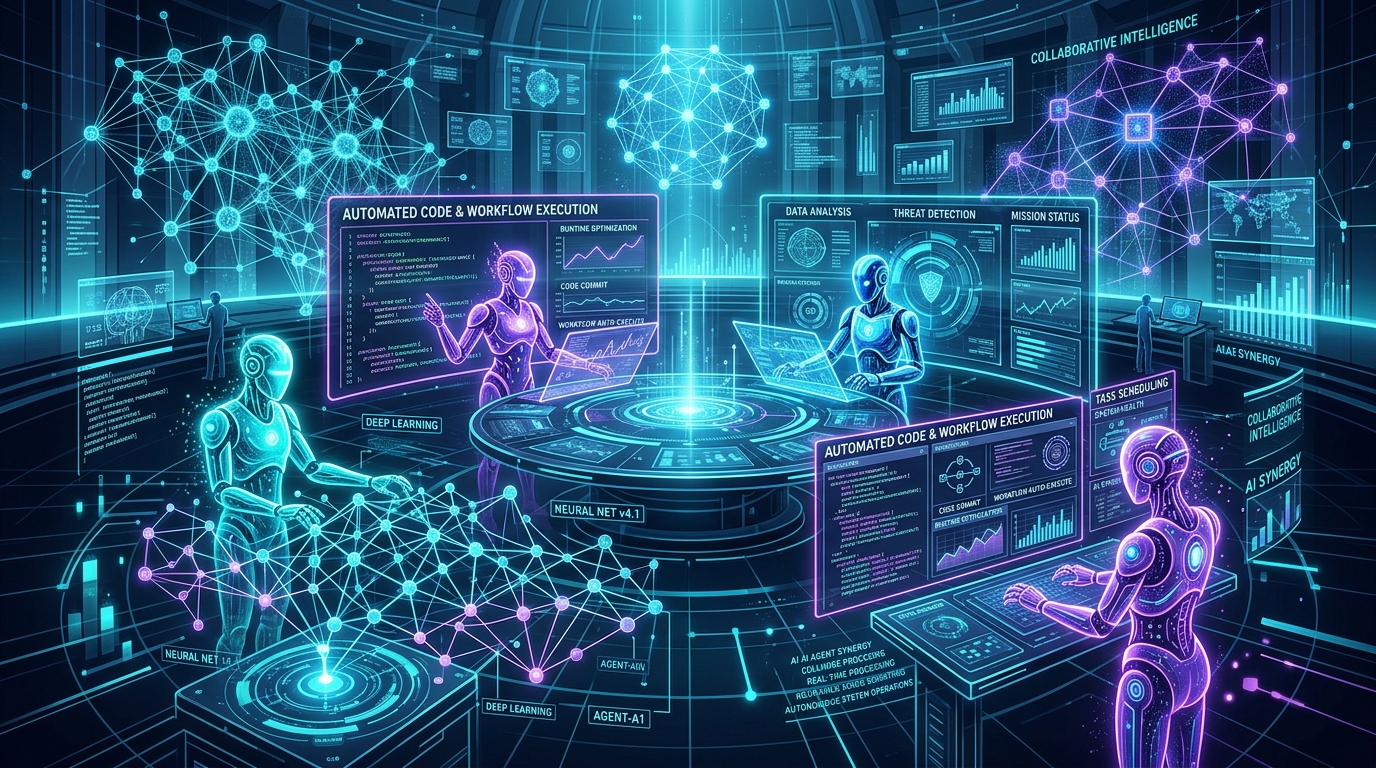
Visual Proof & System Dashboard Architecture
Below is the verified system interface preview and operational dashboard architecture demonstrating live pipeline execution:
Related Resources & Ecosystem Navigation
Also, to explore related software releases and industry developments:
- Track upcoming AI model drops on the AI Launch Calendar.
- Compare top alternatives across categories in the AI Tools Directory.
- Discover humanoid robotics systems in the Robotics Hardware Directory.
- Inspect practical benchmark assessments in our Editorial Reviews.
- Consult the official developer portal at Official Documentation for API specs.