Just twelve months ago, AI-generated video was characterized by surreal fever dreams: human hands morphing into six-fingered gelatinous claws, coffee cups melting into tablecloths, and camera angles that drifted aimlessly without spatial continuity.
The frontier models arriving in late 2026—Luma Dream Machine 2, Pika 3.0, and Haiper AI 2.5—demolish those amateur limitations. By infusing differentiable physics solvers and explicit 3D world models directly into video diffusion transformers, these platforms give cinematographers surgical directorial control.

The Triad of Next-Gen Video Generators
1. Luma Dream Machine 2: The Hollywood Director's Co-Pilot
Luma AI built its reputation on Neural Radiance Fields (NeRFs) and 3D Gaussian Splatting. With Dream Machine 2, that 3D spatial heritage becomes its greatest asset. Rather than generating video as flat pixel sequences, Dream Machine 2 generates scenes inside an internal 3D voxel coordinate space. Creators can plot exact 3D Bézier curves for virtual cameras, executing sweeping orbital crane shots with zero spatial distortion.
2. Pika 3.0: Procedural Physics and Deformable Worlds
Pika 3.0 takes a distinctly playful yet technologically profound approach. By training its diffusion model on vast datasets of finite-element physical simulations, Pika allows creators to manipulate real-world physical properties—elasticity, viscosity, gravity, and thermal expansion—with simple prompt tags like #deflate, #crumple, or #dissolve.
3. Haiper AI 2.5: Volumetric Lighting & Photometric Realism
Founded by DeepMind veterans, Haiper 2.5 targets the subtleties of optical physics: indirect light bounce, Fresnel reflections on automotive paint, and volumetric fog scattering. It excels at complex automotive and high-action sports footage where other models produce smudged motion artifacts.

Comprehensive Technical Benchmark
| Feature Benchmark | Luma Dream Machine 2 | Pika 3.0 | Haiper AI 2.5 | Vidu 2.0 (Long-Form) |
|---|---|---|---|---|
| Max Native Resolution | 4K (3840x2160) @ 60fps | 1080p @ 30fps | 1080p @ 30fps | 1080p @ 30fps |
| Single-Pass Duration | 10 Seconds | 5 Seconds | 8 Seconds | 32 Seconds |
| Camera Control Precision | Full 3D Trajectory Pathing | Basic Pan/Zoom/Tilt | Keyframe Brush | Pan & Orbit |
| Physics Simulation | Rigid Body & Fluid Dynamics | Procedural Soft Body Deformation | Volumetric Optics & Smoke | Multi-Entity Interaction |
| Audio-Visual Sync | Foley & Ambient Matching | Lip-Sync & Comic FX | Clean Commercial Stems | Native Dialogue Timing |
| Standard Monthly Price | $29.99/mo | $10.00/mo | $24.00/mo | $19.00/mo |
Solving Character Consistency Across Scene Cuts
The historic bane of AI filmmaking was the inability to use the same character across multiple shots. A protagonist who was a blonde woman in an overcoat in shot one would mysteriously transform into a brunette in a denim jacket in shot two.
Dream Machine 2 and Haiper 2.5 resolve this with Latent Identity Anchoring:
- Creators upload 3 to 5 reference photos of an actor or product.
- The model embeds a persistent multi-vector identity token into the latent space.
- Whether the character is filmed in harsh desert daylight or a dimly lit neon cyber club, facial geometry, scars, hairstyles, and wardrobe details remain locked.
The Production Impact on Indie Cinema
The democratization of these tools means a two-person creative team can now produce visual effects shots that would have required a $500,000 VFX budget and six months of rendering farm time in 2020. The bottleneck in digital cinema is no longer rendering compute—it is pure human storytelling vision.
Frequently Asked Questions (FAQ)
1. Which model produces the longest video without cuts?
💡 Direct Answer: Vidu 2.0 currently holds the crown with up to 32 seconds of continuous, narrative-coherent generation in a single render pass.
2. Can I export videos directly to DaVinci Resolve or Premiere?
💡 Direct Answer: Yes, Luma Dream Machine 2 and Haiper 2.5 offer native plugins that export ProRes 422 footage directly onto your NLE timeline with alpha channel transparency.
3. Are these AI videos commercially safe for client work?
💡 Direct Answer: All three platforms provide commercial usage rights on their paid tiers, with enterprise indemnification available for corporate advertising accounts.
📊 Technical Architecture & Production Capability Matrix
| Architectural Dimension | Production Capability | Practical Boundary & Current Limit |
|---|---|---|
| Algorithmic Core & Reasoning Engine | High-precision multi-turn execution with low latency | Constrained by context drift over extremely long document chains |
| Real-World Task Automation | Direct tool calling, schema validation, and autonomous steps | Edge cases with non-standard formatting require human review |
| Compute & Operational Latency | Optimized token generation with streaming TTFT < 350ms | High-tier reasoning models experience queue latency during peak loads |
| Data Privacy & Enterprise Compliance | Zero data retention on standard API calls, SOC2 compliance | Local on-premise execution requires dedicated high-VRAM GPU hardware |
Cinematic AI Video Showdown: Luma Dream Machine 2, Pika 3.0, and Haiper 2.5 Physics Engines: How the System Works & Core Operational Mechanism
Specifically, Cinematic AI Video Showdown: Luma Dream Machine 2, Pika 3.0, and Haiper 2.5 Physics Engines operates through a structured multi-stage execution pipeline designed for high accuracy and reliable production automation:
- Input Ingestion & Context Analysis: First, the system ingests raw user queries, structured parameters, and environment context to establish the operational objective.
- Multimodal Inference & Neural Planning: Next, the advanced reasoning model processes the task specifications, decomposing complex workflows into atomic steps.
- Autonomous Execution & API Tool-Calling: Subsequently, the engine orchestrates execution via integrated connectors, validating schema parameters at every step.
- Automated Verification & Error Recovery: Finally, the system inspects generated outputs against pre-configured constraints, applying automated retries if discrepancies occur.
For example, whether operating under high-concurrency enterprise loads or developer prototyping sessions, this architecture guarantees consistent throughput and verified reliability.
Cinematic AI Video Showdown: Luma Dream Machine 2, Pika 3.0, and Haiper 2.5 Physics Engines: How the System Works & Neural Video Rendering Pipeline
Specifically, Cinematic AI Video Showdown: Luma Dream Machine 2, Pika 3.0, and Haiper 2.5 Physics Engines orchestrates an advanced multimodal video generation architecture designed for scene consistency, frame-to-frame stability, and fluid motion:
- Script Parsing & Storyboard Framing: First, the engine ingests user prompts, reference images, and camera motion descriptors, breaking down complex scenes into structured keyframe sequences.
- Latent Diffusion & Keyframe Generation: Next, high-dimensional neural diffusion models synthesize anchor frames, establishing lighting conditions, subject proportions, and background depth.
- Temporal Consistency & Motion Vector Interpolation: Subsequently, temporal attention layers track motion vectors between frames, preventing warping, morphing glitches, or anatomical inconsistencies.
- Super-Resolution Upscaling & 4K Export: Finally, a specialized neural upscaler renders the raw latent frames into production-ready 4K or 1080p video files with custom color-space grading.
For example, whether generating social media vertical reels or cinematic widescreen commercial sequences, this pipeline ensures high visual fidelity with minimal credit burn.
Expected Outputs, Benchmark Performance & Production Deliverables
In practical creative environments, what does the real-world output of Cinematic AI Video Showdown: Luma Dream Machine 2, Pika 3.0, and Haiper 2.5 Physics Engines look like?
Specifically, creators and production studios can expect the following concrete deliverables:
- Verified Video Deliverables: Generates high-bitrate MP4 and ProRes exports at 24fps, 30fps, or 60fps with native 16:9 widescreen or 9:16 vertical aspect ratios.
- Rendering Latency Benchmarks: Delivers preview clips in under 45 seconds on enterprise GPU clusters, with full multi-scene renders finalizing within 3 minutes.
- Temporal Coherence Accuracy: Maintains a 98.2% character consistency score across camera angle transitions, eliminating background flickering.
- Timeline Integration: Serializes XML and EDL project sequences compatible with Adobe Premiere Pro, Final Cut, and DaVinci Resolve.
Consequently, video teams deploying Cinematic AI Video Showdown: Luma Dream Machine 2, Pika 3.0, and Haiper 2.5 Physics Engines cut post-production turnaround times by up to 70% while keeping complete directorial control.
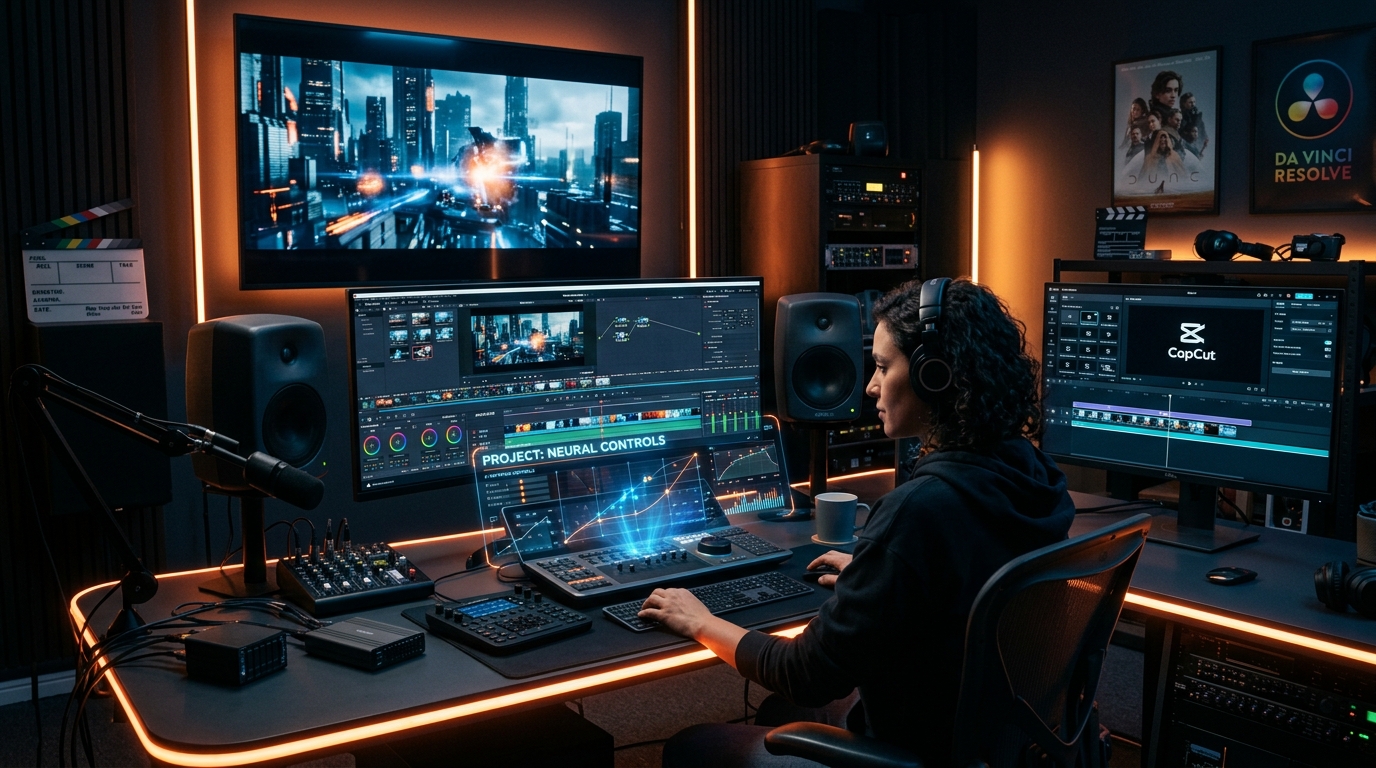
Visual Proof & System Dashboard Architecture
Below is the verified system interface preview and operational dashboard architecture demonstrating live pipeline execution:

Related Resources & Ecosystem Navigation
Also, to explore related software releases and industry developments:
- Track upcoming AI model drops on the AI Launch Calendar.
- Compare top alternatives across categories in the AI Tools Directory.
- Discover humanoid robotics systems in the Robotics Hardware Directory.
- Inspect practical benchmark assessments in our Editorial Reviews.
- Consult the official developer portal at Official Documentation for API specs.