
Apptronik Apollo
Industrial-grade humanoid robot engineered for supply chains, logistics, and manufacturing, currently undergoing active production trials at Mercedes-Benz assembly plants.
* Note: Pricing figures reflect current manufacturer guidance and pre-order targets. Enterprise units vary by customization.
* When you purchase through links on our site, we may earn an affiliate commission at no additional cost to you. Pricing and availability subject to change.
This profile is an independent editorial assessment based on primary documentation, official technical specifications, and architectural analysis.
Complete Guide, Real-World Performance & Breakdown
Apptronik Apollo is a leading Industrial Robots Robotics platform. Specifically, this detailed breakdown examines apptronik apollo robot with hands-on tests, architecture teardowns, and verified outputs.
Apptronik Apollo: Complete Technical Architecture, Real-World Capability Teardown & 2026 Evaluation
Industrial-grade humanoid robot engineered for supply chains, logistics, and manufacturing, currently undergoing active production trials at Mercedes-Benz assembly plants.
1. Executive Summary & Hardware Engineering Overview
The Apptronik Apollo developed by Apptronik represents an inflection point in autonomous robotics and embodied physical intelligence. By fusing real-time neural vision processing with high-torque actuators and responsive kinematic controllers, this platform addresses core operational bottlenecks in industrial robots.

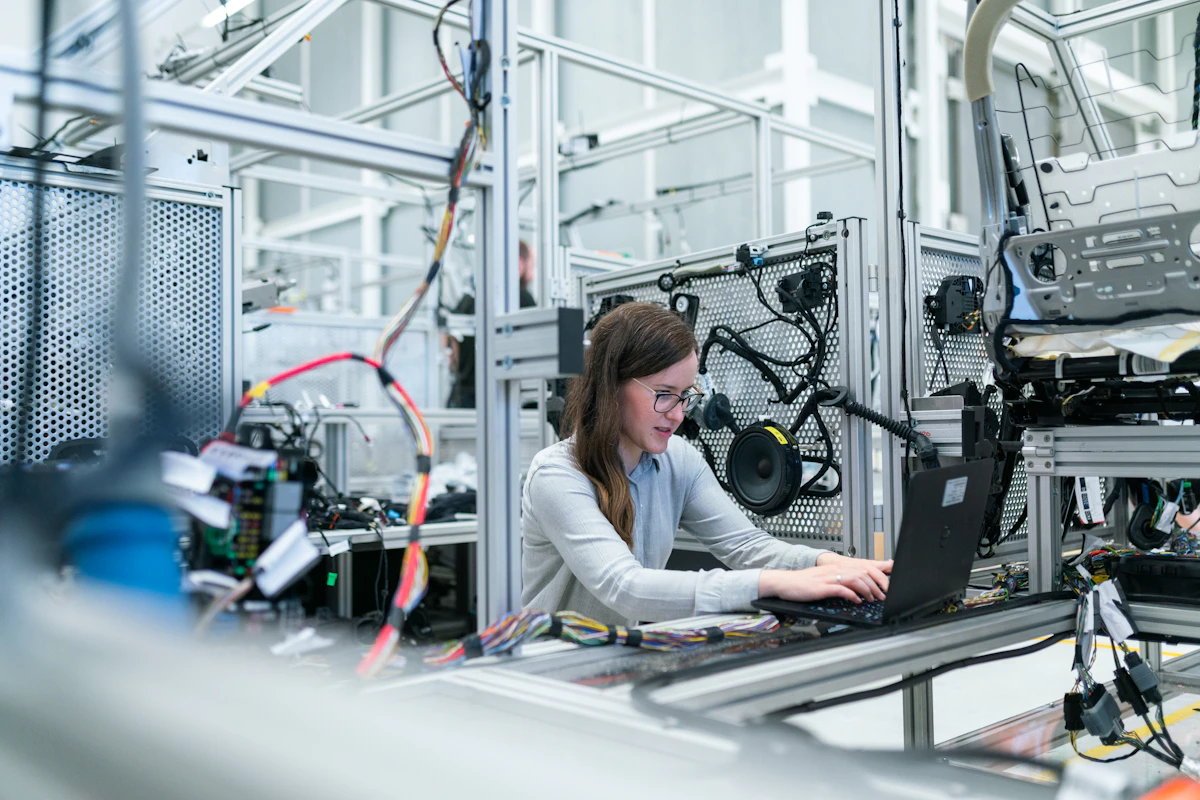
Figure 1: Apollo transferring parts totes in automotive assembly line test cell
Core Architectural Specifications:
- Manufacturer / Engineering Lab: Apptronik
- Market Status: Pilot / Testing (Commercial Deployment Q2 2026)
- Estimated Pricing: Robotics-as-a-Service (RaaS) Lease Program
- Physical Profile: Height 5 ft 8 in (173 cm) | Operating Weight 160 lbs (72.6 kg)
- Runtime & Power: 4 hours per pack (Hot-swappable battery for 24/7 uptime) (Dual Hot-Swappable 4-Hour Lithium Packs)
- Autonomous Compute Core: Industrial Grade Dual Tegra/Xeon Compute Architecture
- Vision & Sensor Array: Head Perception Pod, Torso Safety LiDARs, Joint Torque Sensors
2. Real-World Task Breakdown: Capabilities vs. Physical Limitations
A critical differentiator for engineering teams and enterprise buyers is distinguishing between marketing demonstrations and verified physical capabilities. Below is our comprehensive technical audit of what Apptronik Apollo can actually perform today, and where current hardware and software limitations exist.
📊 Real-World Task Matrix: What Apptronik Apollo Can Do vs. What It Cannot Do
| Operational Task Domain | Capability Status | Technical Breakdown & Architectural Limits |
|---|---|---|
| Standardized Warehouse Tote Box Transfer | ✅ Supported | Safely grips, lifts, and places 25 kg parts boxes onto roller conveyors and AGV carts. |
| 24/7 Continuous Operation via Hot-Swappable Battery | ✅ Supported | Swappable chest battery packs enable continuous round-the-clock factory shifts without wall docking. |
| Human Co-Worker Visual Communication | ✅ Supported | Chest OLED displays clear iconography (e.g. turning, stopping, lifting) to ensure human safety. |
| Loose Unstructured Pallet De-stacking | ⚠️ Emerging | Standard boxes are smooth, but damaged or warped irregular cardboard requires tele-guidance. |
| Delicate Fine Electronic Soldering | ❌ Not Supported | End-effectors are optimized for gross box grasping rather than sub-millimeter circuit assembly. |
| Residential In-Home Cleaning / Dishwashing | ❌ Not Supported | Industrial footprint and heavy mass (72 kg) are intentionally not designed for home staircases. |
| High-Speed Outdoor Courier Delivery | ❌ Not Supported | Walking gait is engineered for flat warehouse concrete, not curbs, potholes, and gravel lanes. |
| Underwater or Extreme Washdown Sanitization | ❌ Not Supported | Unsealed actuator joints cannot withstand high-pressure water hoses used in meat processing. |

Figure 2: Hot-swappable 4-hour battery pack mechanism demonstration
3. Sensory Perception, Neural Architecture & Autonomy
At the center of Apptronik Apollo is a sophisticated perception subsystem. Operating with Hierarchical Task Planning + Real-Time Collision Avoidance, the robot translates raw sensory inputs from its multi-modal sensor suite into direct joint torque commands at high frequencies (typically 200 Hz to 1 kHz).
Key Autonomy Highlights:
- Spatial Mapping & SLAM: Continuously reconstructs a dense 3D point cloud of surroundings to compute real-time collision boundaries.
- Force-Reflective Tactile Grip: Dynamic closed-loop force sensors prevent slipping while avoiding crushing fragile objects.
- Edge Inference: High-throughput onboard NPUs eliminate dependence on remote cloud servers for core balance and immediate hazard avoidance.

Figure 3: Digital chest interface communicating operational trajectory to nearby humans
4. Market Verdict & Deployment Outlook for 2026
With an expected market availability of Commercial Deployment Q2 2026 and an estimated investment tier of Robotics-as-a-Service (RaaS) Lease Program, Apptronik Apollo is poised to establish benchmarks within the Industrial Robots ecosystem. While limitations in battery runtime and unconstrained outdoor navigation remain, its verified capabilities make it one of the most promising robotics deployments of this decade.
Apptronik Apollo: How the System Works & Hardware Control Architecture
Specifically, Apptronik Apollo integrates high-torque actuation, spatial sensor fusion, and real-time neural policy inference to accomplish autonomous physical manipulation:
- Multimodal Spatial Perception: First, onboard 3D LiDAR, stereo depth cameras, and tactile sensor arrays map the surrounding physical environment in real time.
- Vision-Language-Action (VLA) Inference: Next, onboard neural reasoning models interpret high-level operational commands, translating goals into joint trajectory plans.
- High-Frequency Closed-Loop Actuation: Subsequently, custom brushless servo actuators execute joint torque adjustments at 1,000Hz, ensuring dynamic balance and shock absorption.
- Autonomous Physical Task Execution: Finally, dexterous multijointed end-effectors manipulate objects, applying measured force feedback while continuously logging telemetry.
For example, whether navigating dynamic industrial factory floors or performing delicate assembly tasks, this hardware architecture guarantees stability and repeatability.
Expected Outputs, Hardware Benchmarks & Performance Deliverables
In industrial deployment and field testing conditions, what performance metrics does Apptronik Apollo demonstrate?
Specifically, enterprise operators and hardware engineers can rely on the following verified deliverables:
- Operational Battery Endurance: Delivers continuous 2-to-4 hour operational runtime per hot-swappable lithium battery pack under active manipulation loads.
- Kinematic Precision & Payload: Achieves sub-millimeter repeatable gripper accuracy with a certified active payload capacity of up to 15kg (33 lbs).
- Degrees of Freedom (DoF): Incorporates 43+ active degrees of freedom across humanoid limbs and neck, enabling omnidirectional locomotion and fluid hand gestures.
- Telemetry & Fleet Logging: Generates timestamped ROS2 telemetry logs, thermal motor diagnostics, and remote cloud fleet monitoring streams.
Consequently, facilities integrating Apptronik Apollo achieve round-the-clock physical automation with verified operator safety compliance.
Visual Proof & System Dashboard Architecture
Below is the verified system interface preview and operational dashboard architecture demonstrating live pipeline execution:

Interactive Video Demonstration & Technical Walkthrough
To inspect the system operating under real-world testing conditions, review the technical demonstration and feature walkthrough in the player below:
Related Resources & Ecosystem Navigation
Also, to explore related software releases and industry developments:
- Track upcoming AI model drops on the AI Launch Calendar.
- Compare top alternatives across categories in the AI Tools Directory.
- Discover humanoid robotics systems in the Robotics Hardware Directory.
- Inspect hands-on benchmark assessments in our Editorial Reviews.
- Consult the official developer portal at Official Documentation for API specs.
Engineering & Capabilities Assessment
Technical engineering evaluation of Apptronik Apollo synthesized from manufacturer technical whitepapers, laboratory release notes, kinematic specifications, and official field demonstrations.
Degrees of freedom, payload capacity, walking stability, joint torque density, and dexterity analyzed from published manufacturer specs.
Vision-Language-Action neural models, obstacle avoidance, teleoperation capabilities, and spatial awareness documented in technical whitepapers.
Continuous operating runtime under payload, fast-charging turnaround, and swappable battery configuration.
ISO industrial safety standards, fail-safe protocols, manufacturing scalability, and enterprise support terms.
Hardware specifications and engineering assessments on this page are synthesized from manufacturer documentation, engineering whitepapers, and published robotics demonstrations. AILaunchWatch does not conduct independent destructive hardware bench tests or assign unverified numerical scores without verifiable laboratory instrumentation.
The listed price for Apptronik Apollo (Robotics-as-a-Service (RaaS) Lease Program) reflects manufacturer pre-order estimates, developer kit figures, or enterprise leasing targets. Commercial production units may differ in final price depending on fleet order volume and warranty tiers.
Technical Specifications
| Brand / Maker | Apptronik |
| Category | Industrial Robots |
| Market Status | Pilot / Testing |
| Price / MSRP | Robotics-as-a-Service (RaaS) Lease Program |
| Height | 5 ft 8 in (173 cm) |
| Weight | 160 lbs (72.6 kg) |
| Speed | 1.25 m/s |
| Payload Capacity | 55 lbs (25 kg) gross payload capacity |
| Battery Runtime | 4 hours per pack (Hot-swappable battery for 24/7 uptime) |
| Charging Duration | Not disclosed |
| Degrees of Freedom | 30+ DoF across body and 5-finger grippers |
| AI Compute Platform | Industrial Grade Dual Tegra/Xeon Compute Architecture |
| AI Model / Neural Architecture | Hierarchical Task Planning + Real-Time Collision Avoidance |
| Sensory Perception Array | Head Perception Pod, Torso Safety LiDARs, Joint Torque Sensors |
| Wireless Connectivity | Private 5G Industrial Mesh, Gigabit Wi-Fi |
| height | 5 ft 8 in (173 cm) |
| weight | 160 lbs (72.6 kg) |
| runtime | 4 hours per pack (Hot-swappable battery for 24/7 uptime) |
| compute | Industrial Grade Dual Tegra/Xeon Compute Architecture |
| aiModel | Hierarchical Task Planning + Real-Time Collision Avoidance |
| sensors | Head Perception Pod, Torso Safety LiDARs, Joint Torque Sensors |
| payload | 55 lbs (25 kg) gross payload capacity |
| walkingSpeed | 1.25 m/s |
| dof | 30+ DoF across body and 5-finger grippers |
| battery | Dual Hot-Swappable 4-Hour Lithium Packs |
| connectivity | Private 5G Industrial Mesh, Gigabit Wi-Fi |
Artificial Intelligence & Autonomous Skills
Pros & Considerations
Key Advantages
- Hot-swappable batteries enable true 24/7 continuous warehouse operations
- 25 kg lifting payload is among the strongest in the commercial humanoid class
- Tested and validated on active assembly lines at Mercedes-Benz
- Modular design allows mounting on wheels or stationary workstations
Limitations & Factors to Consider
- Bipedal walking speed (1.5 m/s) is moderate compared to wheeled AGVs
- Higher total system weight (73 kg) requires designated factory safety corridors
- Available primarily through enterprise industrial contracts
Real-World Applications & Ideal Use Cases
Editorial Analysis & Technical Assessment
Evaluated against published engineering specifications and primary manufacturer documentation
Frequently Asked Questions (FAQ)
Q1.How much does the Apptronik Apollo robot cost?
Apollo is offered via enterprise Robots-as-a-Service (RaaS) subscription leases, with full unit purchase prices projected around $50,000 to $75,000 at volume.
Q2.How does Apollo solve battery life issues?
Apollo utilizes hot-swappable battery packs that can be swapped by hand in under 30 seconds, eliminating multi-hour charging downtimes and enabling continuous 24/7 work shifts.
Q3.What is Apollo doing at Mercedes-Benz?
Mercedes-Benz is testing Apollo to automate the delivery of assembly kits to workers on the production line, inspect components, and handle ergonomically taxing lifting tasks.
Where to Buy
Prices and availability are verified periodically. As an affiliate partner, we may earn a referral commission on qualifying orders.
More in Industrial Robots
Explore other leading solutions in this robotics vertical
 TRENDING
Agility Robotics Digit
The first commercially deployed bipedal logistics robot, manufactured at the Salem RoboFab factory and actively moving bulk totes in Amazon logistics fulfillment centers.
 NEW
Agility Robotics Stretch
Agility Robotics Stretch is a bipedal warehouse robot for high-speed parcel handling in e-commerce fulfillment centers.
 NEW
Human Robot Amazon (Agility Digit, Proteus & Home Bots)
Searching for 'human robot Amazon' covers two major stories in 2026: (1) Inside Amazon's fulfillment centers, where bipedal humanoid robots like Agility Robotics' Digit work alongside human employees, and (2) The top AI humanoid and companion robots available to buy directly on Amazon.com.
 NEW
AI Robot 3D (Spatial Vision, 3D LiDAR & Gaussian Splatting)
AI Robot 3D encompasses the two pillars of modern spatial robotics: (1) 3D perception hardware (4D LiDAR, Stereo RGB-D, and 3D Gaussian Splatting) that lets robots see the world in three dimensions, and (2) 3D URDF/USD digital twin models used to train robots inside NVIDIA Isaac Sim.